

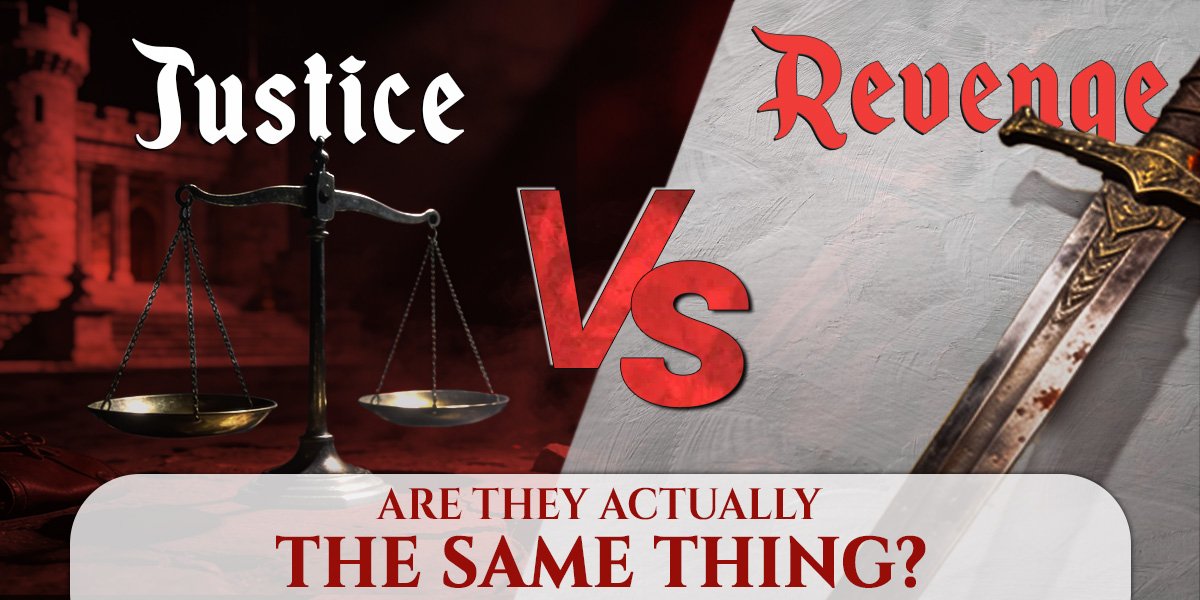
Justice is a fair process carried out by a system meant to serve everyone equally. Revenge is personal, driven by anger, and decided by one person alone, without any outside check on whether it’s fair. That’s the short version. The long version is a lot messier.
Before we discuss justice vs revenge, here is something worth knowing. Many legal experts have been pointing out for decades that most of today’s justice systems are created having the foundations that were in older revenge traditions. Today, courts and legal systems have replaced older practices such as blood feuds and the “eye for an eye” principle. That happened so that they would not settle scores themselves. So in a weird way, justice and revenge aren’t total strangers. They’re more like siblings who grew apart.
Justice is a fair process that follows laws, evidence, and impartial judgment to hold people accountable. Revenge is a personal response driven by anger or emotion, where an individual seeks punishment without a legal process.
What Justice Actually Means
Justice usually points to something bigger than one angry person. It’s tied to a justice system, to laws, to some kind of process that (at least in theory) treats everyone the same. When people talk about legal justice, they mean evidence, a trial, and a punishment that’s supposed to match the crime, decided by someone outside the situation who doesn’t have a personal stake in it.
It’s not perfect. Not even close, honestly. Courts get things wrong all the time. But the whole point of justice is that it tries to be fair, even when fairness is complicated and slow and sometimes disappointing.
Why Legal Justice Tries To Stay Neutral
A judge isn’t supposed to be the victim’s best friend or the criminal’s enemy. That distance is the entire idea. Criminal punishment is meant to fit the crime, not fit however furious the victim happens to feel that day. Take that distance away and you basically just get revenge wearing a court robe.
What Revenge Actually Means
Revenge is personal. There’s no judge, no jury, no outside opinion involved. Personal vengeance is one person deciding someone deserves to suffer, then acting on that feeling directly. It doesn’t wait for proof. It doesn’t really care about proportion either.
The person doing it decides what’s “deserved” all by themselves, and that’s exactly where things start to go wrong. Anger isn’t a great judge of what’s fair. Most of us know this from our own lives, even outside anything as serious as crime.
Justice Vs Revenge: Why People Get Confused
From the outside view, they look almost the same. Someone does something wrong and later gets punished for it. Is that justice? Or is it revenge that just happened to land on the right person?
Here is a quick view of a few things that usually separate them.
| Justice | Revenge |
| Based on law | Based on emotion |
| Fair process | Personal decision |
| Evidence matters | Feelings matter |
| Protects society | Seeks personal satisfaction |
| Aims for fairness | Aims for retaliation |
Moral justice tries to hold onto fairness even when emotions are running hot. Revenge tends to skip that step completely and go straight for the hurt.
Does The Difference Even Matter
Someone might ask, if the guilty person gets punished either way, why bother separating the two?
It matters more than it looks like on paper. A working justice system exists so punishment doesn’t depend on whoever is angriest in the room. It protects people from actual criminals, sure, but it also protects people from mob justice, from getting hurt just because someone was convinced they were guilty without real proof behind it.
Revenge consequences tend to spread too. One act leads to another, then another. Half the old family feuds and long running conflicts in history started with a single act of revenge that nobody ever let go of. Justice, when it’s actually working the way it should, is one of the few things built to stop that cycle instead of feeding it.
Justice Vs Retaliation In Everyday Life
This isn’t only a courtroom question. It shows up in small, ordinary moments too. Someone wrongs you, and there’s a choice in front of you, whether to go through some kind of fair process (talking it out, bringing in someone neutral, whatever fits) or to just retaliate on your own terms and call it even.
Human morality is messy that way. Nearly everyone feels that pull toward getting even at some point. That doesn’t make a person bad, it just makes them human. What actually matters is what they choose to do with that pull once it shows up.
So Which One Wins, Justice Or Revenge
There’s no clean answer here, and honestly anyone who gives you one is probably oversimplifying it. Justice is the fairer path on paper, but real justice systems fail people constantly. Courts get things wrong. Powerful people slip through. Innocent people get punished for things they never did. When that happens, it’s not hard to see why someone starts looking at revenge as the only door left open.
But revenge rarely gives people the peace they expect from it. Most of the time it just creates a fresh wound sitting right next to the old one.
Maybe the honest answer is that justice is the goal, and revenge is just what fills the gap whenever justice shows up too late, or doesn’t show up at all.
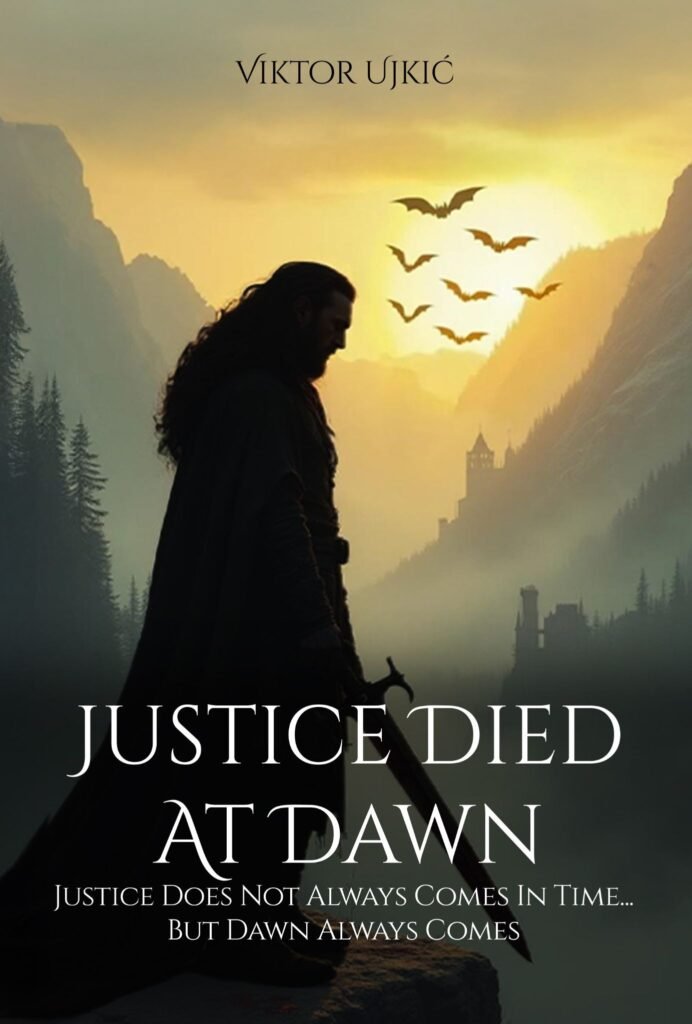
This exact tension, justice failing and people getting pushed toward darker choices instead, exists in thriller fiction story book “Justice Died at Dawn” by Viktor Ujkic.
And if this kind of post interests you, you might also like our earlier post, Why Readers Love Dark Stories and Twisted Plotlines,at Viktor Ujkic Library, which digs into why readers keep coming back to morally messy stories like this one.
FAQs
In justice, there’s someone to decide who is actually wrong in a particular incident. It’s an outside process mostly involving court and legal institutions. Revenge is personally decided by one person. There’s no one to check whether it’s happening fair or wrong.
No, revenge is not a part of legality. The person taking revenge might feel like justice, but without any legal process it’s not considered that part of the legal system.
On an emotional level, people feel it is. Especially right after when something wrong has happened with them. But they feel justified in the moment, and whether it’s actually fair or not are different things. And that’s the actual gap where most of the trouble starts.
It’s a fair question, and some philosophers have actually argued something close to that. The real difference comes down to structure. Justice involves evidence, proportion, and someone outside the situation making the call. Revenge skips all three.