

You don’t really pick up a crime novel just to learn who did it. Half the time you’ve already guessed. What keeps you turning pages is what comes after that — who gets to decide what’s fair, and whether that decision lines up with what your own gut is telling you. That’s the whole draw of Crime Fiction and Justice as a topic, and nobody hands you a clean answer here. Does the system actually deliver justice, or just a verdict, and then move on? The guy who takes the law into his own hands — is he a hero, a criminal, or maybe someone who simply ran out of patience? You end up holding both at once. Uncomfortable, sure, but that’s kind of the whole point.
Crime fiction explores justice by placing characters in situations involving crime, punishment, revenge, morality, and difficult ethical choices. Rather than presenting justice as simply right or wrong, these stories often examine whether legal systems are fair, whether revenge can ever be justified, and how personal morality influences decisions.
Why Justice in Crime Fiction Never Feels Tidy
Nobody wants three hundred pages of a courtroom running smoothly. Justice in crime fiction works precisely because it can be slow, uneven, and occasionally infuriating,much like justice in the real world. A detective cracks the case, and the sentence still feels too light. A guilty man walks free on some technicality nobody saw coming. You feel that sting right along with whoever’s telling the story, and it’s that shared irritation that makes the plot land somewhere deeper than just plot.
Writers lean into this on purpose, most of the time. A neat ending, where the legal justice system does exactly what it’s supposed to, tends to fall flat on the page. So they leave you stuck instead — somewhere between what the law technically permits and what actually feels right. That gap is where things get interesting.
Crime Fiction and Morality: Nobody Plays by the Same Rulebook
Crime fiction and morality often become intertwined from the very first chapter. Every investigator, every victim, every criminal runs on their own private code, and those codes hardly ever line up. At some point you’ll catch yourself rooting for someone who’s clearly broken the law, because their reasons feel justified even as part of you knows they’ve stepped somewhere they shouldn’t have.
Moral conflict does most of the heavy lifting here. A detective bends a rule or two to catch a killer before he strikes again. A witness stays quiet to protect somebody she loves. None of it is simply right or wrong — it’s just human, a bit messy, uncomfortable to watch sometimes, and that’s exactly why you don’t put the book down.
Revenge in Crime Fiction: What Happens When the System Shrugs
Usually it starts small. The court lets the guilty man walk, or an investigation just quietly dies with nobody ever answering for it. That’s the moment a character stops waitingfor the system and starts taking matters into his own hands. and suddenly it’s you deciding whether you’re actually fine with that.
Vigilante justice tends to show up right here, and honestly, it’s tempting — it promises the payoff the courtroom never delivered. But read enough crime fiction, and you’ll notice it’s rarely framed as a clean win. There’s always a cost trailing behind it. It follows the avenger home. Changes how he sleeps, how he looks at people afterward. Revenge doesn’t really wrap anything up; it just passes the wound along to someone else.
Crime Fiction Moral Dilemmas You Can’t Really Shake Off
Some of the strongest crime writing sits you down in front of a problem it never fully solves, not even by the last page. Does a detective protect his informant, knowing that means a dangerous man stays loose a little longer? Does a family take the plea deal so they can move on, even though it means never actually facing what happened to them in a courtroom?
It’s not filler. You’ll be lying in bed later still turning it over, wondering what you’d actually do in that spot — and coming up less sure of yourself than you expected. That’s usually a sign the book got you.
Justice Versus Revenge Fiction: Where Do You Actually Draw the Line?
Justice versus revenge fiction is one of the oldest tensions in storytelling, and it still hasn’t worn thin. Justice, on paper anyway, is about fairness and due process. Revenge is about satisfaction — plain and simple, nothing fancy about it. Crime authors love parking their characters, and by extension you, right on that fault line.
The crime fiction ethical questions that actually stick with you tend to come from books that won’t pick a side outright. Instead of telling you revenge is wrong, or that the justice system always gets it right, they let both paths carry weight and leave the weighing to you.
Moral Ambiguity in Crime Novels
Nothing in a compelling crime novel is completely black and white. and honestly it shouldn’t be. What you get instead is moral ambiguity — someone doing a decent thing for a shady reason, or something awful for a reason you can almost, uncomfortably, understand. That’s not sloppy writing. It’s deliberate, and it mirrors how ethical dilemmas actually play out in real life, where what’s “right” usually depends on whichever value you’re leaning on in that particular moment.
It’s also part of why crime novels and justice pair so well — the ambiguity is what keeps you hooked well after the mystery itself is solved. You stop asking who did it and start wondering whether what happened to them afterward was actually fair.This moral complexity is also one reason readers are drawn to dark stories and twisted plotlines.
Where JUSTICE DIED AT DAWN Fits Into All This
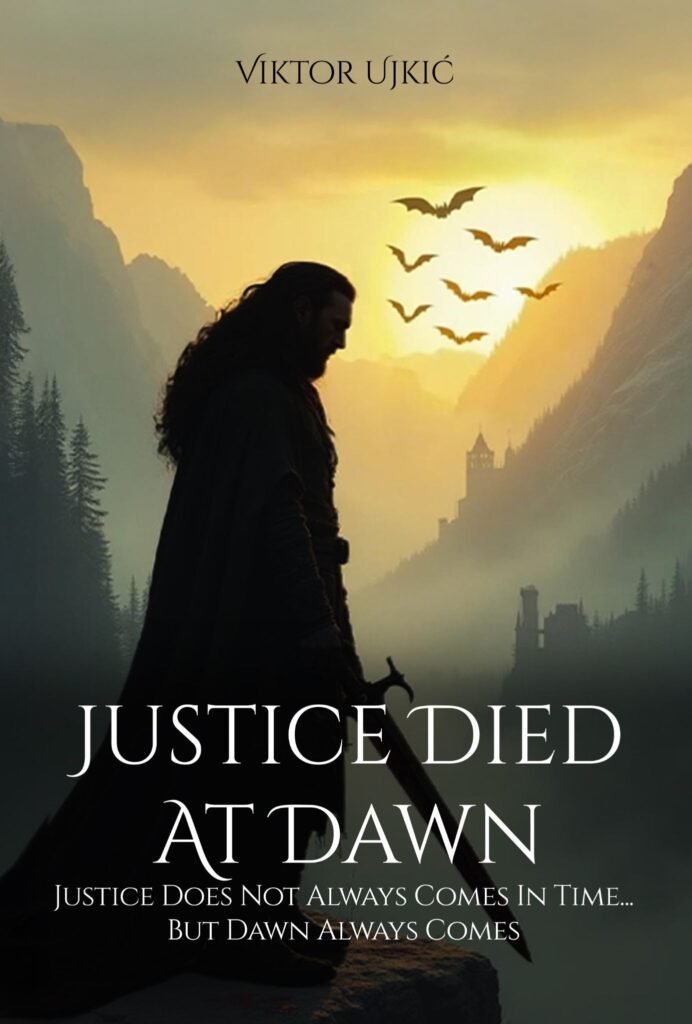
JUSTICE DIED AT DAWN by Viktor Ujkic explores this same conflict between justice, revenge, corruption, and moral choice, placing its characters in situations where the law and personal conscience do not always agree. No easy fix here, and no side is clearly on the right.
Final Thoughts
Maybe that’s the real reason you keep going back to crime fiction — it just won’t let you off easy. Flawed people, broken systems, choices with no clean answer, and then it’s on you to work out what justice even means in that mess. Some days you side with the system. Other days you’re quietly rooting for the guy taking revenge, and you already know that probably says something about you. Either way, that argument you’re having with yourself is what sticks around long after the book’s back on the shelf.
Curious how this same tension plays out beyond fiction? Read our deep dive on Justice vs Revenge: Are They Actually the Same Thing? — it breaks down where the real-world line actually sits, and why we confuse the two more often than we realize.
FAQs
Because readers connect more with things that feel real, and real systems have cracks in them. Writers lean into those cracks on purpose — it’s what gets you actually thinking about fairness instead of just nodding along at a tidy ending.
Rarely, and even when it looks that way, there’s usually a catch waiting a few chapters later. It might feel great the moment a character finally gets even, but most authors won’t let it stay that simple for long.
It’s what keeps characters believable. Once you can’t neatly stamp someone as good or bad, you stay invested — mostly because that’s closer to how people actually act once they’re backed into a corner.